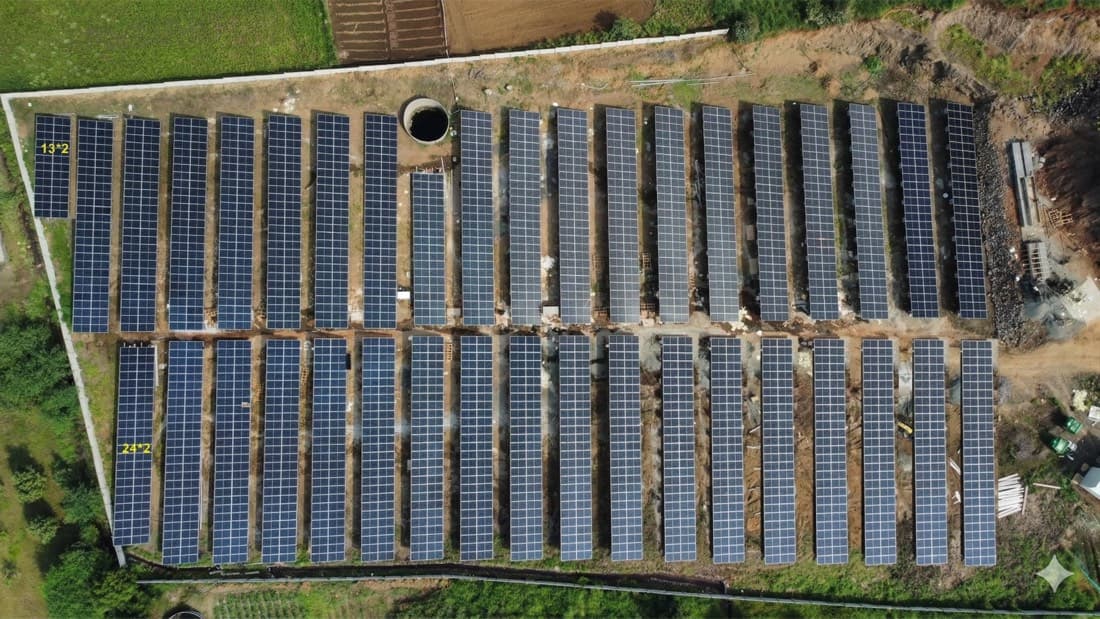
Not every manufacturer can put meaningful solar capacity on their own roof, the load is too large, the roof too small, or the operations spread across sites that don't get equal sun. Off-site structures exist precisely for that mismatch, letting generation happen where the land and irradiation are best and the power be delivered to where it's actually consumed.
What group captive means
Under India's captive generation rules, a plant qualifies as "captive" when the consuming entity (or entities) holds not less than 26% equity in the generating company and collectively consumes not less than 51% of the electricity generated, on an annual basis. Structured correctly, that qualification exempts the arrangement from a large share of the cross-subsidy and transmission charges an ordinary third-party power purchase would attract, which is where most of the landed-cost advantage comes from.
What open access means
Open access lets a consumer buy power from a generator that isn't the local utility and have it wheeled to their connection over the shared grid, for a regulated set of charges rather than the retail tariff. It's the mechanism that makes it possible for a plant built on cheap, sunny, available land in one district to serve a factory load in another, the two don't need to be adjacent, only connected to the same grid.
The landed-tariff maths
The number that actually matters is landed cost: generation cost, plus wheeling and transmission charges, plus any applicable cross-subsidy surcharge, compared against the grid tariff the facility pays today. Done well, that comparison is what delivers the roughly 80% below-grid savings figure that well-structured C&I solar can sustain, predictably, across a 25-year asset life, because the underlying generation cost doesn't move the way grid tariffs do.
Where this fits our solutions
Our Open Access & Group Captive structures cover large-scale energy sourcing, the equity participation the regulation requires, multi-location power allocation across a client's sites, and compliance with the captive-status rules that make the whole structure work. It's the route we recommend most often to manufacturers with multiple facilities and a load too large, or too dispersed, for rooftop CAPEX alone.