A solar system can hit an attractive headline payback number and still be a poor asset. Payback measures the first few years; the engineering decisions made at design stage determine whether the other twenty-plus hold up. The gap between those two timeframes is where most underperforming installations are born.
The roof is not a formality
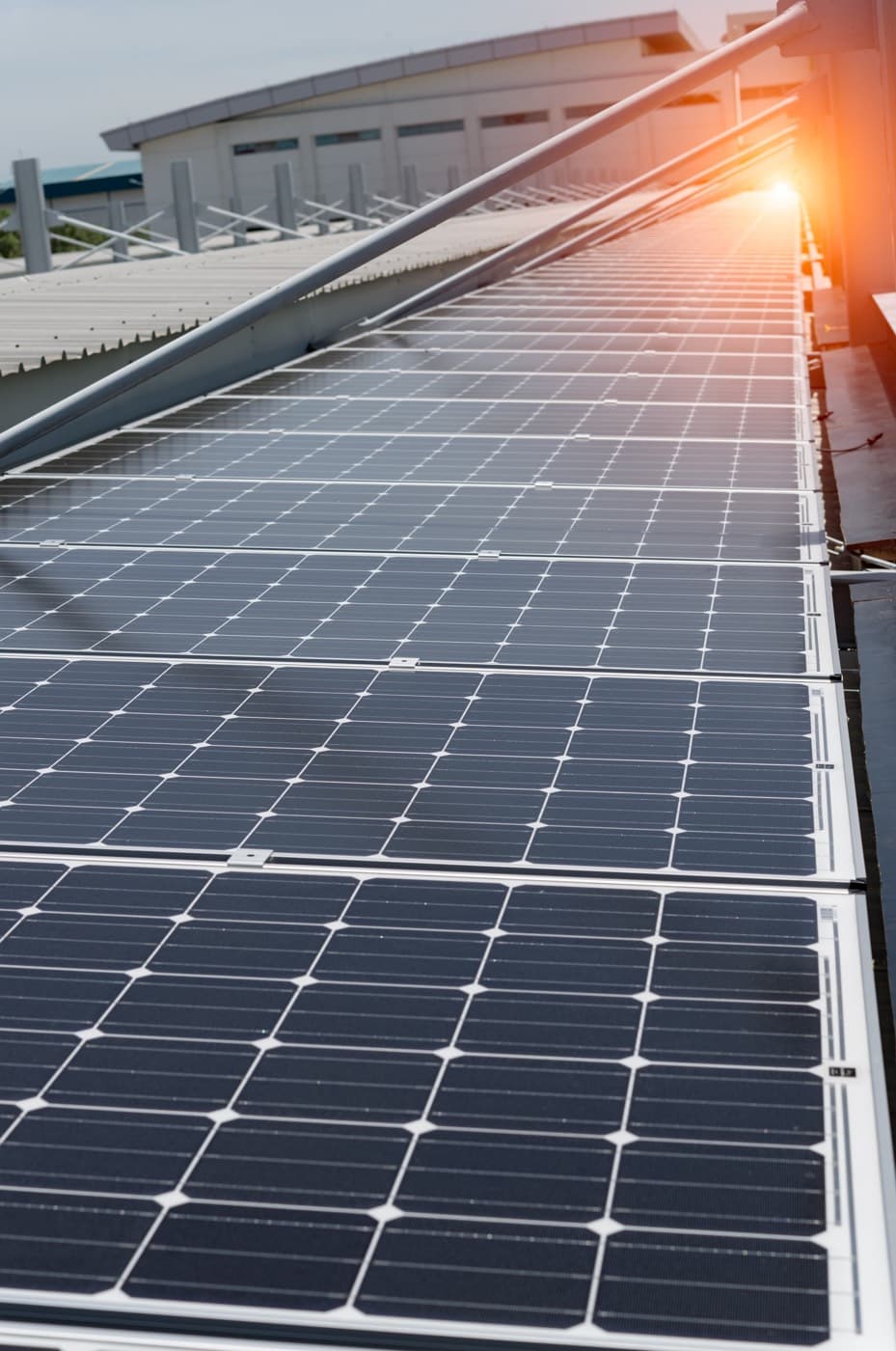
On a live pharmaceutical manufacturing facility, we've delivered zero-penetration mounting across multiple rooftop elevations, no roof punctures, no warranty conflict with the building owner, engineered with BESS-ready infrastructure for a future addition. On a coastal Morocco pilot, the same zero-penetration principle was re-engineered for bitumen-sheet roofing and coastal wind loads, with a Magnis-coated structure to resist the salt-air environment. Same discipline, different site physics.
Terrain and HT evacuation aren't afterthoughts
A ground-mounted plant for a stone-crushing operation required partial rock excavation and an 11 kV HT evacuation run over half a kilometre, engineered and commissioned in 85 days, through the monsoon. A separate ground-mount for a mining client needed a robust structure for a high-dust environment plus its own 11 kV HT evacuation system, delivered in 45 days. Neither of those numbers is a marketing claim about speed; they're a consequence of getting the terrain and evacuation engineering right the first time, so construction doesn't stall on a redesign.
Standards that don't change by postcode
Structural loading, HT evacuation and safety design are engineered to Indian, EU and US benchmarks on every project we deliver, in India or in Morocco. It's the same reviewing discipline applied to a rooftop in Nashik and a pilot in Tangier, because a 25-year asset has to survive whichever jurisdiction's inspector, insurer or lender looks at it next.
The engineering doesn't stop at commissioning
SCADA monitoring, generation analytics and a preventive maintenance schedule are what keep a well-engineered system performing to its modelled output for the full 25 years, with the same team that built the financial case staying accountable for the numbers it produces. That's the difference between an asset and an orphaned installation: someone is still responsible for it in year twenty.